

Introduction
The internet has changed the way businesses connect with customers. People now use search engines, social media, websites, email, video platforms, and mobile devices to discover information, research products, compare services, and make purchasing decisions.
For this reason, understanding digital marketing basics has become important for businesses, students, entrepreneurs, freelancers, and anyone interested in building a career in online marketing.
Digital marketing may seem complicated when you first see terms such as SEO, PPC, content marketing, conversion rate, analytics, keywords, and social media marketing. However, the fundamentals are easier to understand when you learn them step by step.
In this guide, we will explain the digital marketing basics in simple language. You will learn what digital marketing means, how it works, its major channels, important strategies, common tools, examples, key metrics, and how beginners can start learning digital marketing.
What is digital marketing?
Digital marketing is the process of promoting products, services, brands, or businesses through digital channels and technologies to reach and engage a target audience.
These channels can include:
- Search engines
- Websites
- Social media
- Online advertising
- Video platforms
- Mobile applications
- Content platforms
For example, when a business appears in Google search results, publishes an Instagram post, sends an email newsletter, or runs an online advertisement, it is using digital marketing.
In simple terms:
Digital marketing means using digital platforms to promote a business and connect with potential customers.
Digital Marketing Meaning and Definition
The digital marketing meaning becomes easier to understand when we look at the purpose behind it.
Traditional marketing uses channels such as newspapers, television, radio, magazines, and billboards.
Digital marketing uses online and digital channels such as Google, websites, social media, email, YouTube, and online advertising platforms.
The digital marketing definition can therefore be summarised as the use of digital technologies and online channels to communicate with customers, promote products or services, build brand awareness, generate leads, and support business goals.
Digital marketing is not limited to selling products. It can also be used to:
- Educate audiences
- Build trust
- Generate awareness
- Increase website traffic
- Develop customer relationships
- Generate enquiries
- Support customer retention
Why Should Beginners Learn Digital Marketing Basics?
Learning the fundamentals gives you a strong foundation before you move into advanced marketing concepts.
Understanding the basics can help you:
Understand How Online Businesses Grow
You learn how businesses use search engines, websites, social media, content, and advertising to reach customers.
Choose the Right Marketing Channels
Not every business needs to use every digital channel. Learning the basics helps you understand which channels may be suitable for different objectives.
Understand Customer Behaviour
Digital marketing helps you understand how people search, interact with brands, compare products, and make decisions online.
Measure Marketing Performance
Unlike many traditional marketing activities, digital campaigns can provide a wide range of measurable data.
Build a Marketing Career
Digital marketing knowledge can be useful for roles involving SEO, content, social media, advertising, analytics, and marketing strategy.
How Does Digital Marketing Work?
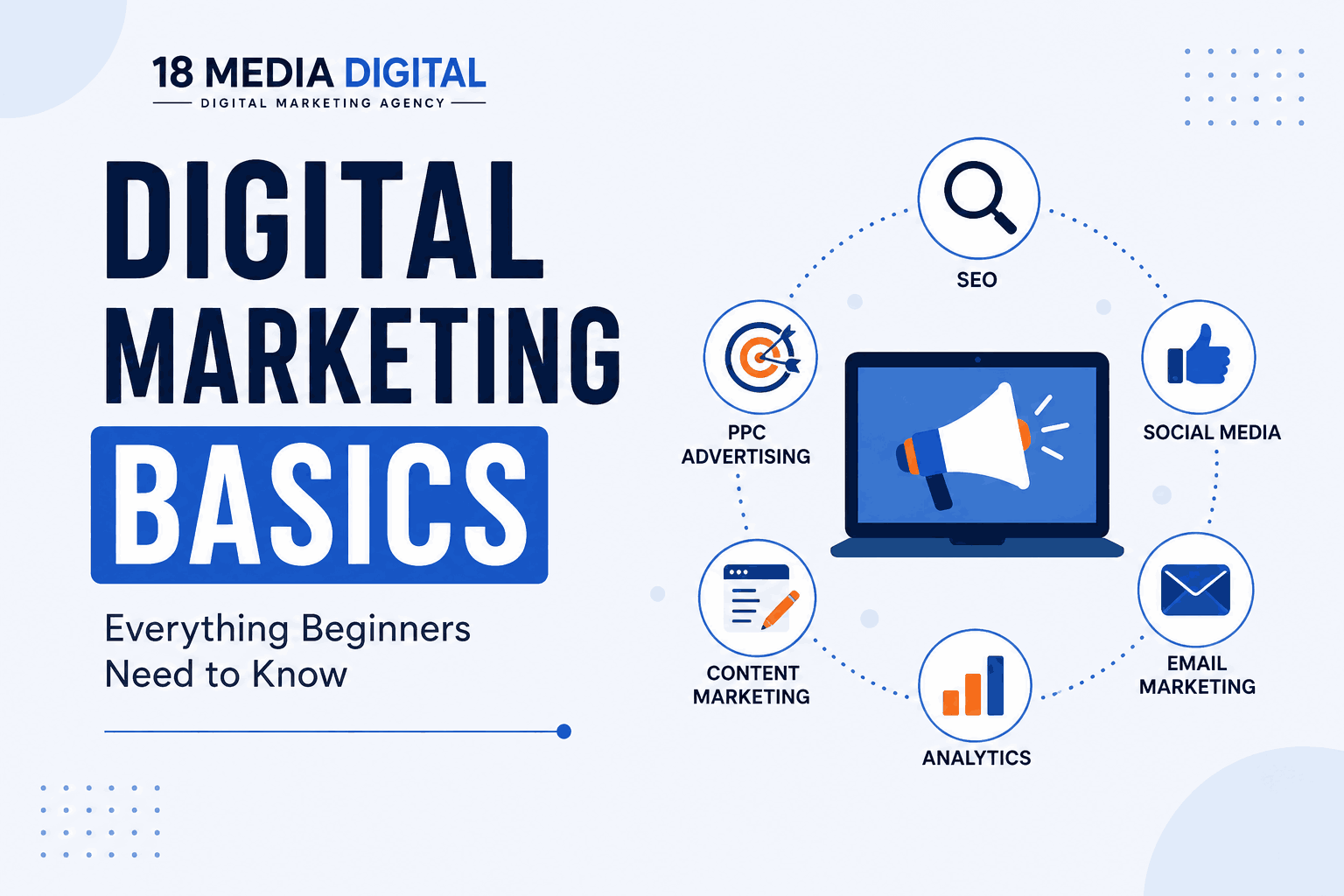
A basic digital marketing process starts by understanding the target audience and their needs. The business then chooses suitable channels such as SEO, social media, content marketing, PPC, or email marketing. The Digital Marketing Basics process involves creating valuable content, reaching potential customers, encouraging them to take action, and measuring the results. Businesses can analyse traffic, engagement, leads, and conversions to understand campaign performance. The Digital Marketing Basics approach also allows marketers to identify what works and make improvements. By following these Digital Marketing Basics, businesses can build online visibility, connect with relevant audiences, generate leads, and support long-term growth.
1. Identify the Target Audience
First, a business needs to understand who its potential customers are.
This may include:
- Age
- Location
- Interests
- Profession
- Needs
- Problems
- Search behaviour
- Buying behaviour
For example, a digital marketing agency in Pune may target local businesses that want to increase their online visibility and generate leads.
2. Understand Customer Needs
The business researches what customers are looking for.
For example, potential customers might search:
- What is SEO?
- How does digital marketing work?
- How much does SEO cost?
- What is social media marketing?
- How can I promote my business online?
These questions can help marketers create useful content.
3. Choose the Right Digital Channels
Businesses select channels based on their audience and objectives.
These can include:
- SEO
- Social media
- Content marketing
- PPC
- Email marketing
- Video marketing
4. Create Useful Content
The business creates content that informs, educates, entertains, or helps customers make decisions.
5. Generate Engagement and Conversions
The goal may be to encourage users to:
- Visit a website
- Contact the business
- Request a quote
- Sign up
- Download something
- Make a purchase
6. Measure and Optimise
Marketers analyse performance and improve their campaigns based on data.
Main Types of Digital Marketing
One of the most important parts of learning digital marketing basics is understanding the major channels.
1. Search Engine Optimization (SEO)
SEO is the process of improving a website’s visibility in organic search engine results.
For example, a business may optimise its website for a search query such as:
“Digital marketing agency in Pune.”
If the website provides useful, relevant content and follows good SEO practices, it may have an opportunity to appear in organic search results.
SEO includes:
- Keyword research
- On-page SEO
- Technical SEO
- Content optimisation
- Internal linking
- Local SEO
- Link building
2. Social Media Marketing
Social media marketing uses social platforms to communicate with audiences and promote a business.
Businesses can use social media to:
- Increase awareness
- Share educational content
- Promote products
- Generate leads
- Engage customers
- Build communities
Examples include Instagram, Facebook, LinkedIn, and other relevant platforms.
3. Content Marketing
Content marketing focuses on creating useful and relevant content for a specific audience.
Examples include:
- Blog posts
- Guides
- Tutorials
- Videos
- Case studies
- Infographics
- E-books
For example, an agency might publish a blog titled “Digital Marketing Basics: Everything Beginners Need to Know” to educate people who are new to digital marketing.
4. Pay-Per-Click Advertising
PPC is a form of paid online advertising where advertisers generally pay when someone clicks on an advertisement.
Search advertisements can help businesses reach people who are actively searching for relevant products or services.
For example, a business offering SEO services can run search ads for relevant service-related keywords.
5. Email Marketing
Email marketing involves sending relevant messages to subscribers or customers.
Businesses may use email for:
- Newsletters
- Product announcements
- Offers
- Educational content
- Lead nurturing
- Customer retention
6. Video Marketing
Video marketing uses video content to communicate information or promote a product, service, or brand.
Examples include:
- YouTube videos
- Tutorials
- Product demonstrations
- Explainer videos
- Testimonials
- Short-form videos
7. Influencer Marketing
Influencer marketing involves collaborating with individuals who have an established audience in a particular niche.
A business may work with an influencer to introduce its product or service to a relevant audience.
8. Affiliate Marketing
Affiliate marketing involves partnerships where affiliates promote products or services and may receive a commission for qualifying sales or actions.
What Is a Digital Marketing Strategy?
A digital marketing strategy is a planned approach to using digital channels to achieve specific business objectives.
A basic strategy generally includes:
Set Goals
Determine what you want to achieve.
Examples:
- Increase traffic
- Generate leads
- Increase sales
- Build awareness
- Improve engagement
Identify Your Audience
Understand who your ideal customers are and what they need.
Research Competitors
Study how competing businesses appear online and what channels they use.
Select Channels
Choose the digital channels that are relevant to your audience and goals.
Create Content
Develop useful and relevant content.
Promote
Use organic and paid channels to distribute your content.
Measure
Track performance using relevant metrics.
Optimise
Improve the strategy based on data and results.
Understanding the Digital Marketing Funnel
The Digital Marketing Basics journey can be understood through a marketing funnel. It represents the different stages a potential customer goes through, from discovering a business to becoming a customer and eventually building a long-term relationship.
Awareness
At the awareness stage, customers discover your business, product, or service for the first time.
Example: A user searches Google and discovers your website through an SEO-optimised blog.
Interest
Once people know about your business, they may want to learn more. Useful content can help answer their questions and build initial trust.
Example: A visitor reads your blog, watches a video, or explores your services page.
Consideration
At this stage, potential customers compare your business with other available options. They may evaluate pricing, reviews, features, services, and testimonials.
Example: A customer compares different digital marketing agencies before choosing one.
Conversion
Conversion happens when a potential customer completes the desired action.
Example: A visitor purchases a product, submits an enquiry form, books a consultation, or contacts the business.
Retention
After conversion, businesses can continue engaging with customers through useful content, personalised communication, support, and follow-up campaigns.
Example: Sending customers helpful updates, newsletters, offers, or ongoing support.
Basic Digital Marketing Tools
Understanding the Digital Marketing Basics also means knowing the different tools marketers use for research, campaign management, measurement, and optimisation.
SEO Tools
SEO tools help marketers with:
- Keyword research
- Website analysis
- Competitor research
- Technical SEO
- Content optimisation
Analytics Tools
Analytics tools help businesses understand:
- Website traffic
- User behaviour
- Engagement
- Conversions
- Campaign performance
Advertising Platforms
Advertising platforms help marketers create, manage, target, and measure paid advertising campaigns across search engines and digital platforms.
Social Media Management Tools
These tools help businesses schedule posts, manage content, monitor engagement, and analyse social media performance.
Email Marketing Tools
Email marketing platforms help businesses create newsletters, manage subscribers, send campaigns, automate communication, and measure results.
Used to create campaigns, manage subscribers, and measure email performance.
Beginners should focus on understanding why a tool is used before trying to learn every feature.
Follow 18 Media Digital on Social Media
Want to keep learning and stay updated with the latest digital marketing tips, SEO strategies, social media trends, advertising insights, content ideas, and business growth strategies? Follow 18 Media Digital, a digital marketing agency, on social media. Connect with us to discover practical marketing tips, useful insights, industry updates, and valuable learning resources that can help you improve your digital marketing knowledge and grow your online presence.

Follow 18 Media Digital on our social media channels:
- Instagram: Follow 18 Media Digital on Instagram
- Facebook: Follow 18 Media Digital on Facebook
- LinkedIn: Follow 18 Media Digital on LinkedIn
- Pinterest: Follow 18 Media Digital on Pinterest
- X (Twitter): Follow 18 Media Digital on X
- YouTube: Subscribe to 18 Media Digital on YouTube
Follow 18 Media Digital and stay connect
Frequently Asked Questions About Digital Marketing Basics
1. What are Digital Marketing Basics?
Digital Marketing Basics are the fundamental concepts beginners need to understand about online marketing. These include SEO, social media marketing, content marketing, PPC advertising, email marketing, analytics, target audiences, and marketing funnels.
2. Why are Digital Marketing Basics important?
Learning Digital Marketing Basics helps beginners understand how businesses attract customers, promote products and services, generate leads, increase online visibility, and measure marketing performance through digital channels.
3. What should I learn first in Digital Marketing Basics?
Start with the fundamentals of marketing, target audience research, customer journeys, SEO, content marketing, social media marketing, PPC, email marketing, and analytics. Understanding these Digital Marketing Basics will create a strong foundation before moving to advanced strategies.
4. What tools are used for Digital Marketing Basics?
Common tools include SEO and keyword research tools, website analytics platforms, advertising platforms, social media management tools, and email marketing platforms. These tools help marketers research audiences, create campaigns, measure results, and optimise performance.
5. Can beginners learn Digital Marketing Basics?
Yes. Digital Marketing Basics are suitable for beginners and can be learned step by step through courses, blogs, videos, practical projects, and real-world experience. Once you understand the fundamentals, you can gradually learn advanced areas such as automation, conversion optimisation, remarketing, and marketing analytics.


Leave a Reply