
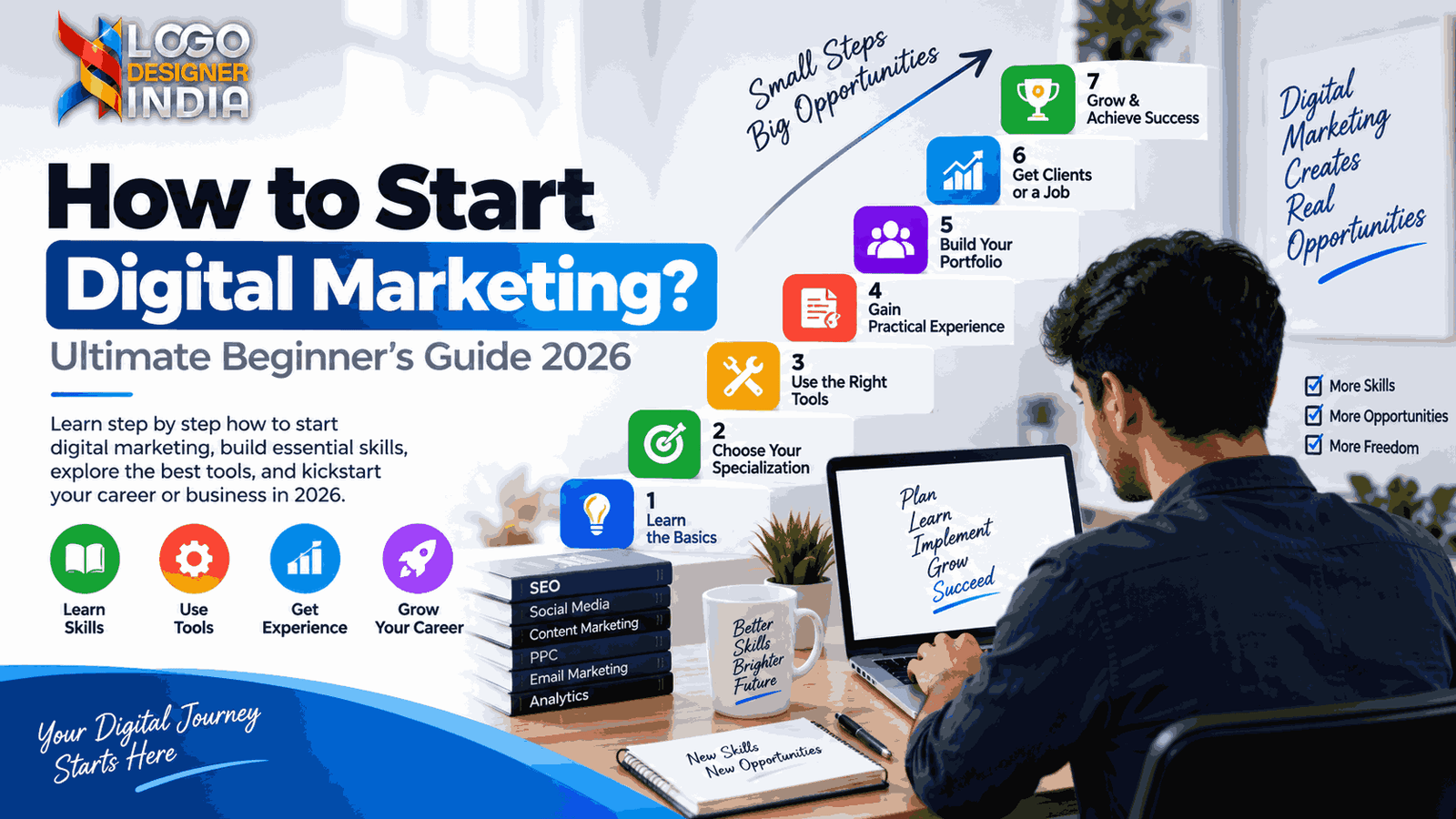

The digital landscape is changing faster than ever, making it difficult for beginners to know where to start. If you are wondering how to start digital marketing, the best approach is to follow a clear roadmap instead of trying to learn every skill at the same time. Start with the fundamentals, understand how different marketing channels work, and gradually develop practical skills through real projects.
Whether you are a fresher building your resume for a digital marketing internship or a business owner trying to grow a local brand, the same basic principles apply. For example, a spice powder brand may want to reach home cooks through social media while also attracting hotel procurement managers through search, content, and targeted campaigns. Each audience requires a different approach, but both depend on understanding the fundamentals.
Learning digital marketing step by step can help you build confidence, create useful campaigns, measure results, and understand what works. You do not need to master everything immediately. Focus on one area at a time, practice consistently, and gradually expand your knowledge.
This guide explains how to start digital marketing in 2026, covering essential skills, major channels, useful tools, practical experience, and steps to build a successful digital marketing career or business strategy.
Step 1: Understand the Core Channels
Before running campaigns, you must understand the different engines that drive traffic online.
- Search Engine Optimization (SEO): The process of optimizing content so it ranks organically (for free) on Google. This involves keyword research, technical site structure, and on-page optimization.
- Content Marketing: Creating valuable blogs, videos, and guides that answer your audience’s questions.
- Social Media Marketing (SMM): Building an audience on platforms like Instagram, LinkedIn, or YouTube.
- Pay-Per-Click (PPC) Advertising: Running paid ads on Google or Meta where you pay only when someone clicks.
Step 2: Learn Strategy Before Tactics (B2C vs. B2B)
The tools you use will be the same, but how you use them depends entirely on who you are trying to reach.
- Business to Consumer (B2C): If you are selling retail products—like custom packaged spice powders directly to households—your strategy should focus on visual platforms (Instagram), emotional engagement, and quick conversions.
- Business to Business (B2B): If you are expanding to supply whole spices in bulk to hotels and restaurants, the sales cycle is longer. You will need to focus on LinkedIn outreach, targeted email campaigns, and ROI-driven messaging aimed at procurement managers.
Step 3: Follow a 90-Day Learning Roadmap
You cannot learn digital marketing just by reading theory; you have to get your hands dirty.
| Phase | Focus Area | Actionable Goal |
| Month 1 | Foundations & Websites | Understand how a CMS (like WordPress) works, basic HTML tags, and the customer journey (Awareness → Decision). |
| Month 4 | Organic Growth (SEO) | Conduct keyword research. Write and optimize three articles based on search intent. |
| Month 3 | Analytics & Measurement | Set up Google Analytics and Google Search Console. Learn to track impressions, clicks, and conversion rates. |
Step 4: Build a Proof-of-Work Portfolio
Certificates are great, but hiring managers and clients want to see results. When building a resume as a fresher to secure an internship, a portfolio of real-world practice outweighs theory every time.
- Start a Personal Project: Launch a blog or a mock brand.
- Run a Micro-Budget Ad: Spend $5 a day on a Meta or Google Search campaign just to watch how real data flows and understand the feedback loop.
- Document Everything: Track your website traffic growth, social media engagement rates, or ad performance. A case study showing how you grew a small page’s reach by 20% proves you can do the job.
Conclusion
Figuring out how to start digital marketing ultimately comes down to focused, consistent execution rather than trying to master every platform simultaneously. The digital landscape can feel overwhelming, but the most successful marketers avoid the trap of platform overload. Instead, they build a rock-solid foundation in core disciplines like search engine optimization (SEO) and consumer psychology.
Your best approach is to choose just one primary channel to master first. Whether you are building a resume as a fresher to secure a competitive agency internship or looking to scale a local business—like moving from selling retail spice powders to supplying bulk whole spices for hotels—theory alone is never enough. You must immediately apply what you learn to real-world projects. Launch a blog, manage a local brand’s social media account, or run a micro-budget ad campaign simply to see how the mechanics operate in practice.
The true secret to long-term success is measurement. By consistently tracking your data, analyzing your traffic, and adjusting your strategy based on real feedback, you remove the guesswork. If you commit to building a hands-on portfolio and adapting to new trends, you will transition from a beginner to a highly capable digital marketer in just a matter of months..
Follow 18 Media Digital on Social Media
keting strategies, SEO, content marketing, social media marketing, paid advertising, and other digital solutions.
Want to stay updated with the latest digital marketing tips, SEO strategies, social media trends, advertising insights, and business growth ideas?

Follow 18 Media Digital on our social media channels:
Follow 18 Media Digital and stay connect
Website: 18 Media Digital
Contact: 9854991818Location: 1st Floor, D17, Airport Rd, near Belsare Hospital, Kasturba D, Kasturba Housing Society, Vishrantwadi, Pune, Maharashtra 411015
Frequently Asked Questions (FAQ)
1. How to start digital marketing with no experience? Begin by learning the fundamentals of how websites and search engines work. Choose one primary skill, like SEO or Content Marketing, and practice by starting your own free blog or social media page to build hands-on experience.
2. When figuring out how to start digital marketing, can I learn for free? Yes. You can use free resources like YouTube, Google Skillshop, and industry blogs to learn the basics. However, the most valuable “free” education comes from running your own test projects and analyzing the data.
3. Do I need to know coding when learning how to start digital marketing? No coding is required. While understanding basic HTML (like heading tags or image alt text) is helpful for technical SEO, modern platforms like WordPress and website builders handle the heavy lifting.
4. When researching how to start digital marketing, how long does it take to actually learn? You can grasp the core concepts in 1-2 months. With consistent daily practice, you can build enough practical skill to start applying for entry-level internships or freelance gigs within 3-6 months.
Leave a Reply