
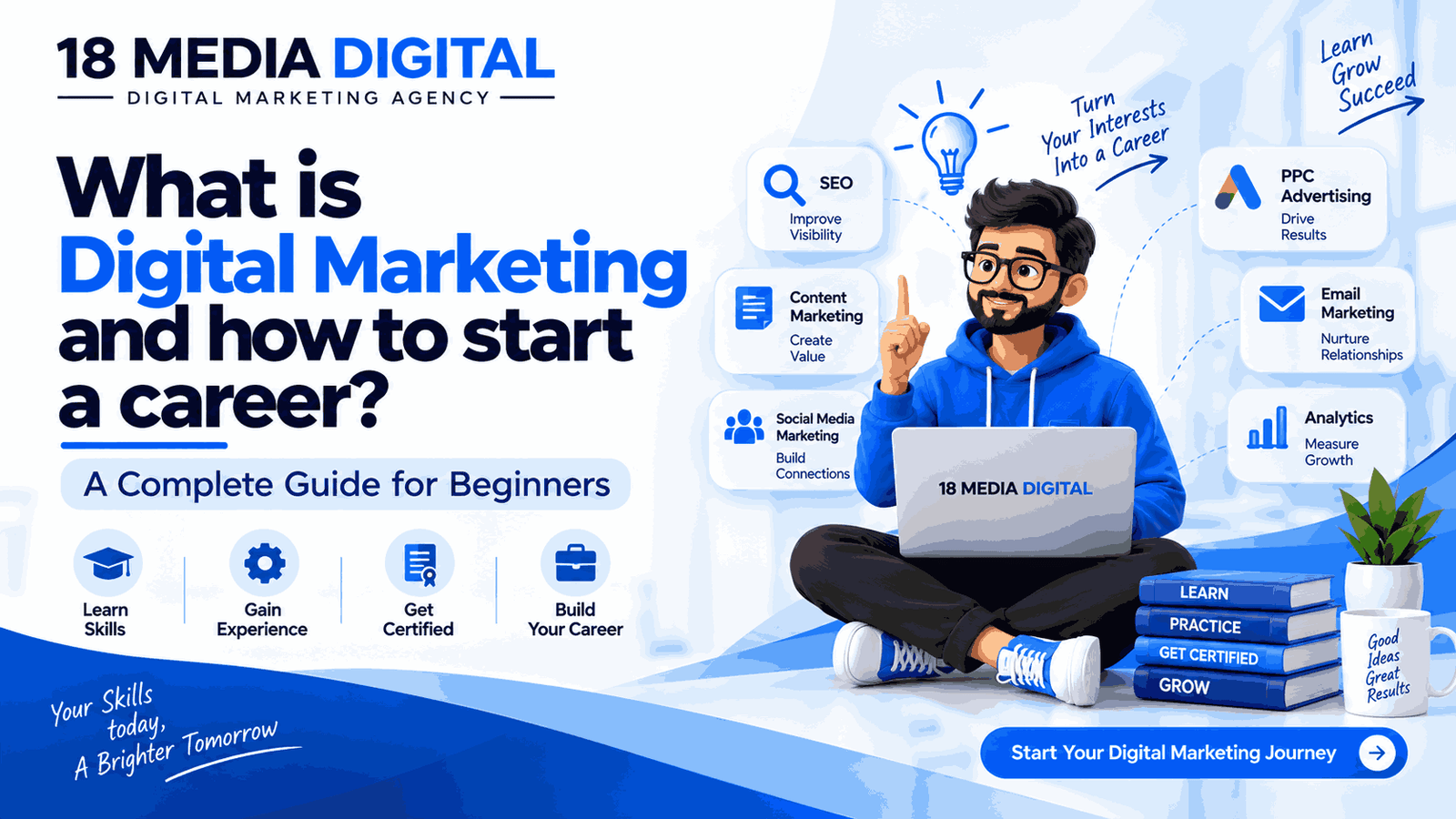

In the fast-paced, ever-evolving landscape of modern business, attention is the most valuable currency. By 2026, consumer attention has shifted almost entirely to digital platforms—from generative AI search engines and short-form video feeds to hyper-personalized email inboxes. If you are looking to enter this dynamic and lucrative industry, you are likely asking a fundamental question: What Is Digital Marketing and What Skills Are Required? to succeed today.
Gone are the days when a company could rely solely on static billboards, radio slots, or generic magazine ads. Today, marketing is a two-way, highly measurable, and data-driven conversation between brands and consumers. To truly grasp the modern landscape, one must first define What Is Digital Marketing and What Skills Are Required? for sustainable, scalable business growth.
This comprehensive guide will break down the exact definition of the industry, the core pillars that drive revenue, and the specific technical, analytical, and creative proficiencies you need to master in 2026.
The Core Definition: Beyond Traditional Advertising
At its simplest, digital marketing encompasses any marketing or advertising effort that uses an electronic device or the internet. Businesses leverage search engines, social media, email, websites, and mobile apps to connect with current and prospective customers.
However, many fresh graduates and transitioning professionals ask, “What Is Digital Marketing and What Skills Are Required?” because the definition keeps expanding. Unlike traditional marketing—which broadcasts a single message to a broad, undefined audience in hopes that a fraction of them will convert—digital marketing allows you to zero in on the exact demographic most likely to buy your product. It is highly targeted, instantly adjustable, and rigorously measurable.
The 2026 Evolution: AI, Automation, and G.E.O.
The industry has undergone a massive shift heading into 2026. The integration of Artificial Intelligence (AI) has transformed how marketers plan, execute, and analyze campaigns.
- Hyper-Personalization: Consumers now expect brands to understand their specific needs and pain points before they even initiate a search.
- Generative Engine Optimization (G.E.O): With AI tools like ChatGPT and Google AI Overviews answering user queries directly, traditional Search Engine Optimization (SEO) has evolved. Marketers must now optimize content to be cited by AI assistants, a practice known as Answer Engine Optimization (AEO) or G.E.O.
- Short-Form Video Dominance: Platforms like TikTok, Instagram Reels, and YouTube Shorts dictate consumer trends, making video a non-negotiable asset.
Before diving into specific software tools and daily tasks, let’s answer the foundational question: What Is Digital Marketing and What Skills Are Required? to succeed across these emerging channels.
The 5 Core Pillars of Digital Marketing
To understand the skills you need, you must first understand the ecosystem. Digital marketing is divided into several interconnected disciplines. Mastering one is great, but understanding how they all work together makes you invaluable.
1. Search Engine Optimization (SEO)
SEO is the art and science of optimizing a website to rank organically (for free) on search engine results pages (SERPs) like Google. It involves keyword research, creating high-quality content, and ensuring your website’s technical backend (speed, mobile responsiveness) is flawless. SEO is critical because it captures high-intent users—people actively searching for a solution to their problem.
2. Content Marketing
Content fuels the entire digital ecosystem. This pillar focuses on creating and distributing valuable, relevant, and consistent media to attract and retain an audience. This includes blog posts, e-books, whitepapers, podcasts, and video scripts. Without compelling content, your SEO, social media, and email campaigns will fail.
3. Pay-Per-Click Advertising (PPC) and SEM
While SEO takes time, PPC provides immediate visibility. Search Engine Marketing (SEM) involves bidding on specific keywords so your ads appear at the top of search results. You pay a fee every time a user clicks your ad. This model extends to social media platforms, where you can run highly targeted display and video ads.
4. Social Media Marketing (SMM)
Social Media Marketing promotes your brand and content on channels like LinkedIn, Instagram, TikTok, and X (formerly Twitter) to increase brand awareness and drive traffic. In 2026, SMM is heavily focused on community-led growth, influencer collaborations, and organic, short-form storytelling.
5. Email Marketing and Automation
Despite being one of the oldest digital channels, email marketing remains one of the highest-converting strategies. It allows you to nurture leads over time using automated drip campaigns, personalized product recommendations, and segmented newsletters.
The Breakdown: What Is Digital Marketing and What Skills Are Required?
When analyzing What Is Digital Marketing and What Skills Are Required?, we must categorize them into three distinct buckets: technical proficiencies, analytical capabilities, and creative storytelling. The most successful professionals—often referred to as “T-shaped marketers”—possess a broad understanding of all these areas while specializing deeply in one or two.
Here is an extensive breakdown of the exact skills employers are demanding in 2026.
1. Search Engine Optimization (SEO) & G.E.O. Skills
SEO is the backbone of online visibility. To drive organic traffic, you must understand how search algorithms process information.
- Keyword & Intent Research: You must know how to use tools like Ahrefs, SEMrush, or Google Keyword Planner to find out exactly what your audience is searching for, and more importantly, why they are searching for it (informational vs. transactional intent).
- On-Page Optimization: Mastering the strategic placement of keywords within HTML tags (Title tags, H1s, Meta Descriptions) and structuring content for maximum readability.
- Technical SEO: Understanding site architecture, Core Web Vitals, XML sitemaps, and schema markup to ensure search engines can crawl and index your site without errors.
- AI & G.E.O. Optimization: Structuring data and writing authoritative, experience-driven content (following Google’s E-E-A-T guidelines) so that generative AI models confidently cite your brand in their summarized answers.
2. Data Analytics and Performance Tracking
A common follow-up to “What Is Digital Marketing and What Skills Are Required?” is how to actually measure success. Data analysis is the ultimate answer. Marketing without data is just guessing.
- Mastering Analytics Platforms: Proficiency in Google Analytics 4 (GA4) and Google Search Console is mandatory. You must be able to track user journeys, measure bounce rates, and analyze average session durations.
- Conversion Rate Optimization (CRO): The ability to look at a webpage, identify where users are dropping off, and implement A/B testing to improve the percentage of visitors who complete a desired action (like filling out a form or making a purchase).
- Attribution Modeling: Understanding which marketing channel deserves credit for a sale. Did the customer buy because of a Facebook ad they saw on Monday, or the email they received on Friday? Analytics specialists map this multi-touch journey.
3. Content Creation and Digital Storytelling
The creative aspect is a huge part of What Is Digital Marketing and What Skills Are Required? because machines cannot replace genuine human empathy.
- Copywriting: The ability to write persuasive, clear, and action-oriented copy for ads, landing pages, and email subject lines. Copywriting is the psychology of selling through words.
- Content Strategy: Planning a cohesive editorial calendar that aligns with broader marketing campaigns and company goals.
- Short-Form Video Production: You do not need to be a Hollywood director, but you must know how to conceptualize, record, and edit engaging vertical video content using smartphone apps like CapCut or Premiere Rush.
- Basic Graphic Design: Understanding visual hierarchy, color theory, and brand consistency using accessible tools like Canva or Adobe Express.
4. Paid Media and Performance Marketing (PPC)
Companies spend billions on advertising, and they need skilled professionals to ensure they get a positive Return on Ad Spend (ROAS).
- Campaign Architecture: Knowing how to structure campaigns, ad sets, and individual ads within platforms like Google Ads and Meta Ads Manager.
- Audience Targeting: Utilizing first-party data, lookalike audiences, and demographic targeting to ensure ads are served only to high-potential buyers.
- Automated Bidding Strategies: In 2026, algorithms handle much of the manual bidding. The skill lies in feeding the algorithm the correct conversion data and creative assets so the AI can optimize delivery.
5. Marketing Automation and CRM Management
As businesses scale, manual follow-ups become impossible.
- Workflow Automation: Building logic-based sequences using tools like HubSpot, Mailchimp, or ActiveCampaign. For example, if a user downloads an e-book, an automated workflow triggers a specific sequence of educational emails over the next two weeks.
- CRM Proficiency: Managing Customer Relationship Management software to track where a prospect is within the sales funnel and ensuring marketing and sales teams are perfectly aligned.
6. AI Prompting and Tool Proficiency
In 2026, AI is a core competency, not a novelty.
- Prompt Engineering: Knowing how to write detailed, contextual prompts for Large Language Models (LLMs) to assist with brainstorming, outlining, and analyzing large datasets.
- AI Ethics and Fact-Checking: AI frequently hallucinates. A skilled marketer uses AI for efficiency but rigorously fact-checks, edits, and refines the output to maintain brand voice and accuracy.
7. Essential Soft Skills
While technical tools change, the underlying human skills required to execute them remain constant.
- Adaptability: The digital landscape shifts rapidly. Algorithms update, new social platforms emerge, and advertising rules change. You must be willing to unlearn and relearn continuously.
- Strategic Thinking: The ability to see the big picture. Instead of just “posting on Instagram,” a strategic thinker asks, “How does this post drive email signups, and how do those signups impact Q3 revenue?”
- Communication: Whether you are presenting campaign results to stakeholders, briefing a graphic designer, or writing a client report, clear and persuasive communication is paramount.
How to Acquire These Skills in 2026
If a peer asks you “What Is Digital Marketing and What Skills Are Required?”, point them to this exact learning sequence. You do not need a traditional university degree to master this field; you need practical experience and an active portfolio.
1.Master the Fundamentals Through Certifications:Months 1-2.
Start with free, industry-recognized certifications to build a theoretical foundation. The Google Digital Garage, HubSpot Academy Inbound Marketing certification, and Meta Blueprint courses provide comprehensive overviews of SEO, analytics, and paid media.
2.Build a Personal Sandbox Project:Months 3-4.
Theory is useless without execution. Launch your own WordPress website or blog. Write SEO-optimized articles, set up Google Analytics 4 to track your own traffic, and create social media profiles to promote your content. This serves as a live testing ground where you can break things without risking a client’s budget.
3.Learn to Manipulate Data:Months 4-5.
Once your site has traffic, dive deeply into the analytics. Learn how to track conversions, analyze user demographics, and generate reports. Being able to translate raw data into an actionable business strategy is what gets you hired.
4.Take on Small Freelance Projects:Months 5-6.
Reach out to local small businesses or non-profits and offer to audit their website, run a small $50 Google Ads campaign, or manage their social media for a month at a highly discounted rate (or for free). Document the “Before” and “After” metrics meticulously to build a case study.
5.Stay Updated with Industry Intelligence:Ongoing.
Digital marketing changes weekly. Subscribe to authoritative industry blogs like Search Engine Land, Moz, Neil Patel, and MarketingProfs. Join LinkedIn groups and marketing communities to stay ahead of algorithm updates and AI trends.
Top Digital Marketing Roles in 2026
Aligning your career goals starts with understanding What Is Digital Marketing and What Skills Are Required? for these specific, highly demanded job titles.
| Job Title | Primary Focus | Core Skills Required |
| SEO & Growth Strategist | Driving sustainable, organic website traffic and dominating search engines. | Technical SEO, Keyword Research, Data Analytics, G.E.O., Content Strategy |
| Performance Marketing Manager | Managing paid ad budgets to generate immediate leads and maximize ROAS. | PPC, Google Ads, Meta Ads, A/B Testing, Budget Management, Analytics |
| Content Strategist | Planning and overseeing the creation of multimedia content to engage audiences. | Copywriting, Video Strategy, Storytelling, SEO Basics, Brand Voice |
| Marketing Analytics Specialist | Interpreting campaign data to identify trends, measure ROI, and guide strategy. | GA4, SQL Basics, Data Visualization (Looker Studio), Attribution Modeling |
| Marketing Automation Manager | Streamlining customer journeys through automated software and CRM workflows. | CRM Management (HubSpot/Salesforce), Email Marketing, Workflow Logic |
Building a Portfolio That Gets You Hired
When you apply for a job, your resume tells the employer what you know, but your portfolio shows them what you can do. Your portfolio is the physical proof that answers the employer’s question: What Is Digital Marketing and What Skills Are Required?
A high-converting marketing portfolio should not just be a collection of pretty graphics or well-written blog posts. It must be framed around data and results.
How to structure a portfolio case study:
- The Problem: E.g., “A local spice vendor had zero online visibility and relied entirely on foot traffic.”
- The Strategy: E.g., “Implemented a local SEO strategy, claimed their Google Business Profile, and ran a highly targeted hyper-local Facebook ad campaign.”
- The Execution: Show the ad creatives, the list of keywords targeted, and screenshots of the campaign setup.
- The Results: E.g., “Increased website traffic by 300% in two months and generated 45 wholesale inquiries, reducing the Cost Per Acquisition (CPA) by 20%.”
Employers and clients hire marketers to solve business problems and generate revenue. If you can prove your ability to do that through concrete case studies, you will bypass traditional entry-level barriers.
Conclusion
The digital landscape is moving faster than ever. Ultimately, mastering What Is Digital Marketing and What Skills Are Required? gives you a massive competitive advantage, regardless of whether you want to work for a Fortune 500 tech company, join an agile startup, or build your own freelance consultancy.
Digital marketing is a unique profession because it perfectly blends extreme creativity with rigid, mathematical data analysis. You must be empathetic enough to understand a customer’s deepest pain points, creative enough to tell a story that captures their attention, and analytical enough to track their journey through a complex sales funnel.
By focusing on the core pillars of SEO, Content, PPC, and Automation, and by embracing the AI-driven tools of 2026, you position yourself at the forefront of the modern economy. As you move forward in 2026, keep researching “What Is Digital Marketing and What Skills Are Required?” because the industry never stops evolving, and continuous learning is the ultimate skill of all.
Follow 18 Media Digital on Social Media
keting strategies, SEO, content marketing, social media marketing, paid advertising, and other digital solutions.
Want to stay updated with the latest digital marketing tips, SEO strategies, social media trends, advertising insights, and business growth ideas?
Follow 18 Media Digital on our social media channels:
Follow 18 Media Digital and stay connect
Website: 18 Media Digital
Contact: 9854991818Location: 1st Floor, D17, Airport Rd, near Belsare Hospital, Kasturba D, Kasturba Housing Society, Vishrantwadi, Pune, Maharashtra 411015
Frequently Asked Questions (FAQ)
1. How quickly can I learn What Is Digital Marketing and What Skills Are Required?
With dedicated, focused study and practical application, a beginner can learn the fundamentals, earn necessary certifications, and build a basic portfolio in 3 to 6 months. However, mastering advanced concepts like technical SEO and complex data attribution takes years of hands-on experience.
2. Is coding necessary when learning What Is Digital Marketing and What Skills Are Required?
No, extensive coding is not strictly necessary. While having a basic understanding of HTML and CSS is highly beneficial for technical SEO and formatting web pages, modern marketers rely heavily on Content Management Systems (like WordPress or Shopify) and drag-and-drop builders. The focus is on marketing strategy, not software engineering.
3. For a small business owner, What Is Digital Marketing and What Skills Are Required? to increase local sales?
Small business owners should focus heavily on Local SEO (optimizing a Google Business Profile), community-led social media marketing, and hyper-targeted PPC ads. The required skills include basic keyword research, responding to customer reviews, creating authentic short-form video content about the business, and interpreting basic geographic data in Google Analytics.
Leave a Reply